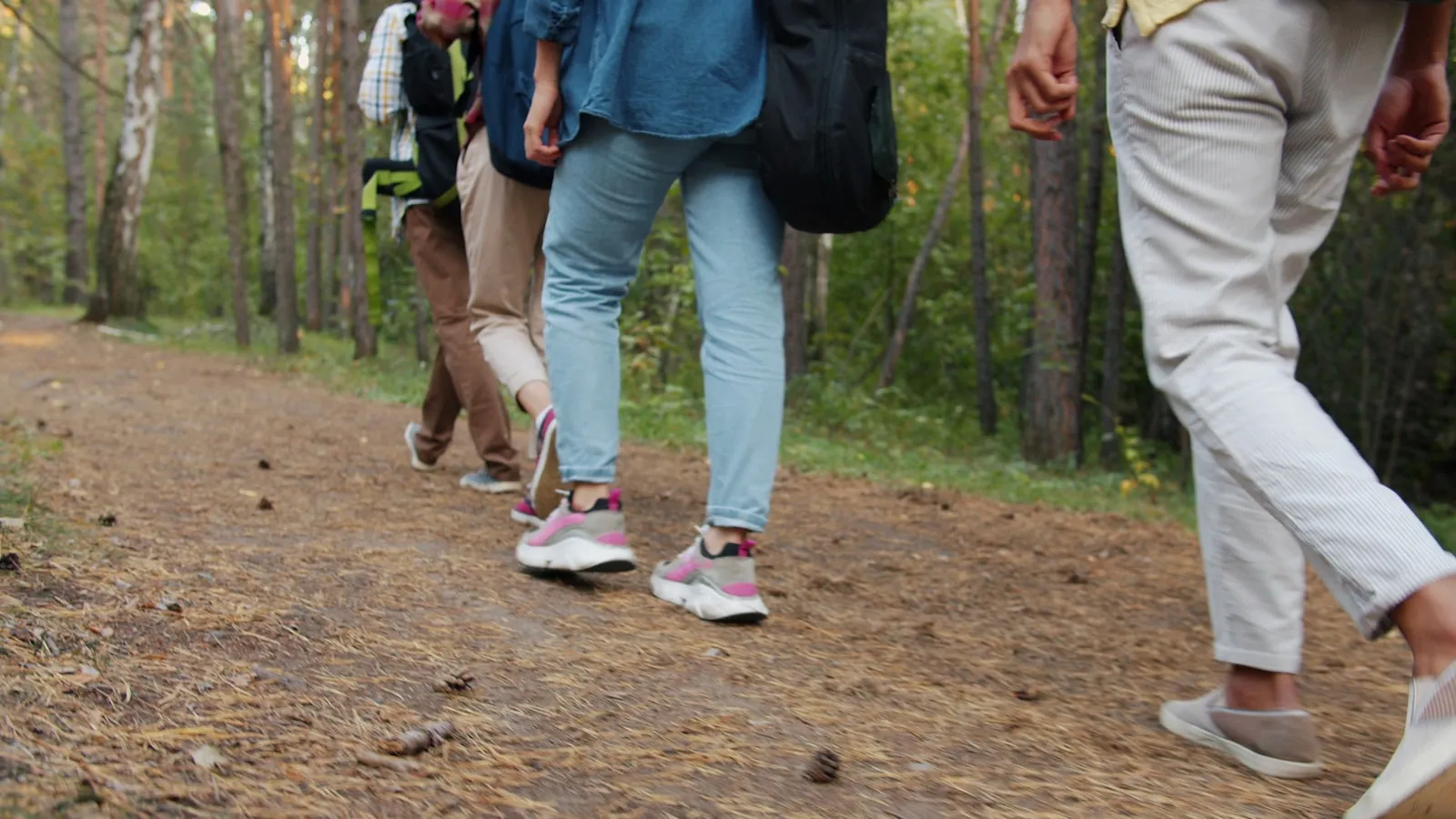
That moment when you are walking and your feet suddenly won’t lift off the floor is called freezing of gait. Often the harder you push to take a step, the less your feet move — so if you panic and rush, it is easy to lose your balance and fall.

Why do your steps stop so suddenly
Walking is produced by the pedunculopontine nucleus in the brainstem working together with the basal ganglia circuit. The explanation is that when dopamine drops, the balance between these circuits breaks down and the command for “the next step” briefly fails to get through. As the condition progresses, other brain areas that had been compensating for walking — the premotor cortex, among others — are affected as well, so the unconscious compensation you had been managing with weakens and freezing becomes more frequent.
When does it tend to happen
It shows up especially often in specific situations.
- Crossing a threshold or passing through a narrow space
- Changing direction or turning your body around
- The moment you take your first step
- When there are things on the floor, or a crowd of people to navigate
- Getting on and off an elevator
It is also known to happen more when you are rushing, when something startles you, or when you feel stressed or anxious. In other words, your emotional state in that moment matters as much as your physical state. It also tends to occur more during “off” periods, when your medication is wearing off, so noting down when you freeze gives your care team something to work from when adjusting your dose timing.
Ways to get moving again in the moment
- Count out loud, or walk as if you are marching. Counting “one, two” out loud while lifting your legs high often gets your steps going again.
- Hum a tune and walk to its beat. A sound with rhythm pulls the next step along.
- Pick a spot on the floor and step onto it like a target. Lifting your foot high, as if stepping over an imaginary bar, also helps.
- Change direction. If forward won’t work, step backward briefly or sideways once, then try again.
- Ask the person with you for help. Just having someone count “one, two” for you, or hold your hand and walk alongside you, can be enough to break the freeze.
Smartphone apps and wearable devices can help too
There are a growing number of wearable devices designed to reduce freezing of gait — smartphone apps that play a steady rhythm of sound or vibration as you walk, and insole sensors that go inside your shoes. Some devices analyze your gait in real time and automatically send a rhythmic cue when they detect that freezing is about to start. If you are interested, you can ask your physical therapist whether there is a product that suits you.
Your home environment is worth adjusting
If there is a particular corner or doorway in your home where you freeze up, you can put colored tape on the floor there and use it as a visual cue. Having a visible target makes it easier to get your steps started again. Conversely, rugs and mats with busy patterns or sharply contrasting colors can look like the floor suddenly changing and may actually trigger freezing, so on the paths you use often it is better to remove them or switch to plain, slip-resistant flooring. Keeping the lighting bright in spaces you move through frequently — hallways, stairs, the bathroom — helps as well.
It is closely tied to falls
About 40% of people with Parkinson’s are reported to experience freezing of gait, and among those who do, more than half had a fall within the previous six months — far higher than among people who don’t freeze (about 20%). In fact, a substantial share of falls in Parkinson’s has been found to be related to freezing. When you do freeze, rather than forcing your way out of it in a hurry, calmly working through the tips above is actually safer. If you freeze often, or it has led to a fall, it is worth checking with your care team about whether your medication needs adjusting, and getting a referral to a physical therapist to learn specific training techniques.
This article is not a substitute for medical diagnosis or treatment. If you freeze often, or you are worried about falls, please talk with your care team.