
Parkinson’s medication is not a course of treatment. It is a standing order that runs for the rest of your life, and it usually grows — one tablet three times a day becomes four medicines at five different times. So the question is not what a box costs once. It is what the whole arrangement costs every year, and which parts of it the state has already paid for.
New Zealand splits this into two systems that people constantly merge into one:
- Pharmac decides which medicines are funded, and on what terms. That decision is about the medicine.
- The prescription charge is a flat co-payment you pay the pharmacy per item. That charge is about you, not about the medicine.
You can be prescribed a fully funded medicine and still pay at the counter. You can also pay nothing at all for the same medicine, depending on your age and your card. Both facts are below, checked in August 2026.
What Pharmac funds for Parkinson’s
The Pharmaceutical Schedule groups these under Agents for Parkinsonism and Related Disorders. As at the August 2026 Schedule, the funded list is:
| Group | Funded medicines |
|---|---|
| Levodopa combinations | Levodopa with benserazide · Levodopa with carbidopa · Levodopa with carbidopa and entacapone |
| Dopamine agonistsA class of Parkinson's drug that acts directly on dopamine receptors in the brain instead of being converted into dopamine the way levodopa is.Learn more | Pramipexole hydrochloride · Ropinirole hydrochloride · Apomorphine hydrochloride |
| MAO-B inhibitorMonoamine oxidase B inhibitors — drugs that slow the breakdown of dopamine in the brain, often used alongside or before levodopa.Learn more | Rasagiline |
| COMT inhibitors | Entacapone · Tolcapone |
| Other | Amantadine hydrochloride |
| Anticholinergics | Benzatropine mesylate · Procyclidine hydrochloride |
Apomorphine is worth a separate note because it is the one people assume will be a fight. It is funded, under the brand Movapo, as an injection — $59.50 subsidy for the 10 mg per ml, 2 ml ampoule and $121.84 for the 5 ml ampoule at the August 2026 Schedule. The Schedule also records that “Three months supply may be dispensed at one time if endorsed ‘certified exemption’ by the prescriber or pharmacist.”
Rasagiline arrived through a Pharmac consultation in April 2021, which was explicit about access:
No eligibility criteria have been proposed for rasagiline and it would be funded for all New Zealanders who need it.
What is not on the Schedule
This is the more useful half of the list, because it explains conversations that otherwise make no sense — a specialist mentioning a patch, a relative overseas describing a medicine you cannot get.
As at the August 2026 Schedule, the following do not appear as funded community medicines in New Zealand: rotigotine (the transdermal patch), selegiline, opicapone, safinamide and istradefylline.
That does not mean they do not exist here or that nothing can be done. It means they are not subsidised through the community Schedule, so getting one involves either paying privately, where the medicine is available at all, or the exceptional-circumstances route below.
Pharmac’s route for this is called Named Patient Pharmaceutical Assessment (NPPA) — its official name, worth keeping exactly as written so you can find it. Pharmac uses the process to decide whether to fund a treatment for one named individual whose clinical circumstances are exceptional.
Three things about it are worth knowing before you raise it.
- You cannot apply. “Only authorised prescribers can submit NPPA applications, within their scope of practice.” Other health professionals can prepare the paperwork, “but a prescriber must be named as the applicant.”
- Funded alternatives come first. Pharmac requires that all suitable funded options have been tried, and says treatments funded this way “must be ‘end of spectrum’. This means that there are no other clinically suitable funded options for the person.”
- It is not a second queue. In Pharmac’s words, “NPPA cannot be used to undermine the Pharmaceutical Schedule by providing a competing pathway to access funded treatment.” If Pharmac has already considered the medicine for that use, it is unlikely to fund it this way without something exceptional about the individual situation.
Prescribers who want to talk it through before applying can ring Pharmac on 0800 660 050 (option 2).
Special Authority: it is the non-motor medicines, not the Parkinson’s ones
Pharmac’s line is that it “sets specific criteria that must be met before some medicines will be funded.” Applications go through the Electronic Special Authority system, and — the part people get wrong — your prescriber applies, not you. There is nothing for you to post.
Where this actually shows up in Parkinson’s is in the medicines used for the symptoms that are not tremor and stiffness. Several of these are Special Authority items in the August 2026 Schedule:
| Medicine | Commonly used in Parkinson’s for | Schedule form |
|---|---|---|
| Midodrine | Blood pressure that drops on standing, and the faintness that comes with it | SA1474 |
| Modafinil | Daytime sleepiness severe enough to interfere with the day | SA2451 |
| Melatonin | Sleep, including REM sleep behavior disorderREM sleep behavior disorder — acting out dreams during sleep, sometimes violently, often years before other Parkinson's symptoms appear.Learn more | SA2523 |
| Rivastigmine patches | Thinking and memory changes in Parkinson’s | SA2524 |
Being on that list does not tell you whether you personally meet the criteria — that is the point of criteria. What it tells you is that a “no” at the pharmacy counter is not the end of the road, and that the next step is a conversation with the prescriber about an application, not a complaint to the pharmacy. Pharmac’s own email for questions about criteria is [email protected]; problems with a submitted application go to 0800 855 066.
The $5 charge, and the 20-item ceiling
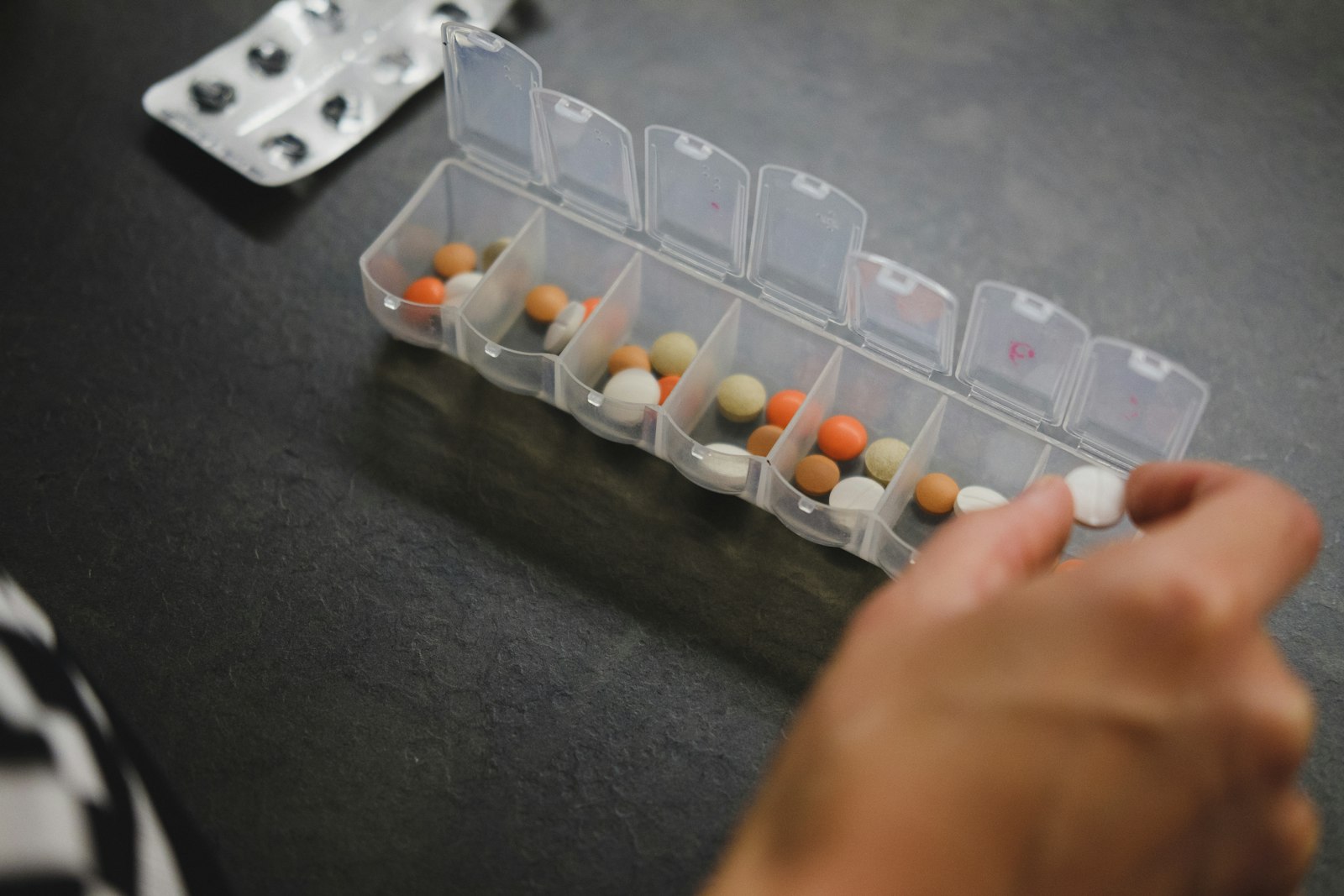
Health New Zealand’s rule is plain:
People need to pay the standard $5 prescription charge, with exemptions for people: aged 13 years or under; holding a Community Services Card (CSC), or a dependent child of a CSC holder; aged 65 years or over; holding a Prescription Subsidy Card (PSC).
Two of those exemptions cover a large share of people living with Parkinson’s, and they are worth saying out loud because people assume they still owe the money.
If you are 65 or over, there is no prescription charge. If you hold a Community Services Card, there is no prescription charge — and Supported Living Payment brings a Community Services Card with it automatically. If you do not have one, see Community Services Card and High Use Health Card.
For everyone else, the charge is $5 per item, and then the ceiling arrives:
You become eligible for the subsidy once you have paid for 20 prescription items from 1 February each year. Once you are eligible, you do not have to pay any more prescription charges for the rest of that year (to 31 January).
The counting is done from electronic records, and it is a household count, not a personal one:
You can reach the 20-item threshold by combining prescription items for your partner and dependent tamariki aged from 14 up to 18.
And to claim it:
Talk to your pharmacist and make sure they know the names and ages of all the people in your whānau. Your pharmacist will check the electronic records to see how many prescriptions you and any eligible whānau members have paid for since 1 February. If the total is 20 or more, you will qualify for a prescription subsidy. Any pharmacy can check your eligibility.
Note the reset date. The year runs 1 February to 31 January, not the calendar year and not the tax year. Your count goes back to zero on 1 February, which is why a February pharmacy bill can be a surprise after months of paying nothing.
Three practical things that change the bill
If a medicine is not fully subsidised there can be more to pay on top, and that part is not affected by any of the above: “Fees for medicines that are not fully funded by Pharmac remain the same.” Ask the pharmacy what the extra is before the prescription is dispensed, not after.
Where to check, before you believe anything
Funding decisions change month by month, and the Schedule is republished monthly. Anything on this page is a snapshot of the August 2026 Schedule.
If this applies to you
| Your situation | What to do |
|---|---|
| You were told levodopa needs approval in New Zealand | It does not. Levodopa combinations are funded with no Special Authority |
| You are 65 or over and still paying $5 an item | You are exempt. Tell the pharmacy your age is on record. See turning 65 |
| You are on Supported Living Payment | You have a Community Services Card, so prescription charges do not apply to you |
| You have paid for a lot of items since February | Ask any pharmacy to check your count. At 20 you stop paying until 31 January |
| Your specialist mentioned a patch or a newer medicine you cannot find here | It may not be on the Schedule. Ask whether a funded alternative does the same job, and whether an NPPA application is warranted |
| You were declined a Special Authority medicine | Ask your prescriber which criterion was not met, and whether your situation has since changed enough to reapply |
| Your blood pressure drops when you stand, or daytime sleepiness is wrecking your days | These have funded Special Authority options. Raise them as separate problems rather than as part of “the Parkinson’s” |
| You pay for prescriptions, GP visits and travel to appointments | Apply for Disability Allowance. You do not have to be on a benefit |
This page is not medical advice and does not tell you what to take or change. Funded status is from the Pharmaceutical Schedule of August 2026 and the Schedule is updated monthly. Check the current Schedule and talk to your care team and pharmacist about your own medicines.