
The Pharmaceutical Benefits Scheme is the reason a Parkinson’s prescription in Australia costs tens of dollars rather than hundreds. The government negotiates a price with the supplier, pays most of it, and caps what the pharmacy can charge you. That cap is the number to understand, because for a condition treated with several medicines taken several times a day, the cap is what you actually live with.
Two thresholds change 2026 in ways that are easy to get backwards, so start there.
Two prices, and the card that decides which one you pay
There are two co-payment amounts. The PBS explanatory notes set the maximum cost of a PBS item at a pharmacy at $25.00 for someone without a concession card and $7.70 for a concession card holder, before any brand premium or therapeutic group premium that may apply.
That is a difference of $17.30 on every script. For someone taking a levodopa preparation, a dopamine agonist and something for sleep or constipation, the yearly gap between holding a concession card and not holding one runs into hundreds of dollars before anything else happens.
The two amounts are also on different tracks. The PBS explanatory notes state that the general co-payment “will reduce to $25.00 for the calendar year of 2026, and continue to be adjusted on 1 January each year from 2027 in line with movements in the Consumer Price Index,” while the concessional co-payment “will remain at $7.70 for five calendar years from 2025 to 2029, and continue to be adjusted on 1 January each year from 2030.”
So the concessional price is frozen until the end of 2029. Plan around that: it is one of the few numbers in this whole field that will not move for years.
2026 made scripts cheaper and the Safety Net further away
The PBS Safety Net gives you cheaper medicines once your spending for the calendar year passes a threshold. Here is what changed on 1 January 2026, taken from the PBS history table:
| 2025 | 2026 | |
|---|---|---|
| General co-payment | $31.60 | $25.00 |
| General Safety Net threshold | $1,694.00 | $1,748.20 |
| Concessional co-payment | $7.70 | $7.70 |
| Concessional Safety Net threshold | $277.20 | $277.20 |
Once you pass the threshold, someone without a concession card pays up to $7.70 for the rest of the year, and a concession cardholder pays nothing.
Now do the division, because nobody does it for you. At the maximum co-payment, $1,748.20 ÷ $25.00 is about 70 prescriptions to reach the general threshold in 2026. Under the 2025 figures it was $1,694.00 ÷ $31.60 — about 54. Each script got cheaper and the finishing line moved further away at the same time.
For concession cardholders the sum is exact and much kinder: $277.20 ÷ $7.70 is 36 prescriptions, and it has been that number since 2024.
That arithmetic is ours, not the government’s — it assumes every script is charged at the full co-payment, which real life rarely delivers exactly. Use it as a sense of scale, not as a prediction.
One more 2026 change with a sting. Since 2016 pharmacies have been allowed to discount the co-payment. From 1 January 2026, the PBS notes state, concession card holders “will be eligible for a discount of up to $0.60 off the concessional co-payment of $7.70,” and the allowable discount for everyone else is reduced to nil. If your pharmacy used to knock a dollar off your script, that is why it stopped.
The Safety Net is not automatic — you have to apply
This is the single most common way people lose money they were entitled to. Services Australia is explicit: “Once you reach the threshold, you’ll need to apply for a PBS Safety Net card to get cheaper medicines.”
There are two cards, and which one you get depends on where you started the year. Someone without a concession card who passes the threshold gets a card that brings them down to the concessional rate. A concession cardholder who passes the threshold gets an entitlement card, and after that PBS items are free — except for any brand premium or therapeutic group premium that applies.
The tracking is the practical problem. One pharmacy that dispenses everything for you will usually keep the tally. Two pharmacies will not, and neither will a hospital outpatient pharmacy plus a community one. Services Australia’s answer is a paper form:
If you use more than one pharmacy:
That refund form covers a second situation worth knowing: Services Australia says you can also use it if you “didn’t show your Medicare card or concession card when you purchased the medicine at the pharmacy.” Turning up without the card is recoverable. Say nothing for a year and it is not.
Where you buy also matters. Spending counts at community pharmacies, at private hospitals approved to supply PBS medicines, and at outpatient pharmacies of public hospitals. Services Australia adds one genuinely surprising line: “Non-PBS medicines you get from the outpatient pharmacy of a public hospital can count toward the PBS Safety Net.”
The charges that never count
Several things you pay at the counter do nothing for your threshold. Each one is small; together they explain why the total on your receipts is bigger than the total Services Australia has counted.
Delivery charges. “A charge can be added for delivering pharmaceutical benefits from the pharmacy. This charge does not count towards the Safety Net.” If mobility or off periodsThe swings between periods when Parkinson's medication is working ("on") and periods when its effect has worn off ("off"), which become more abrupt as the condition progresses.Learn more mean you rely on delivery, budget for it separately.
After-hours fees. A pharmacist may charge extra for supplying outside normal trading hours. That charge is yours to pay, and the PBS states it does not count towards the Safety Net.
The extra for a dearer brand. Under the brand premium arrangements, pharmacies are reimbursed based on the lowest-priced brand, and any extra charge for a higher-priced brand is yours. Services Australia adds the part that matters here: “If you choose a more expensive brand, the extra cost you pay may not count towards the threshold.”
Early supply. If you fill a script too soon, you pay the full co-payment, it does not count towards the Safety Net, and no discount is allowed. More on this below, because it catches travellers.
Brand premiums, and why brand switching is not a small question in Parkinson’s
Levodopa is dispensed under several brands. The PBS reimburses at the lowest-priced brand and you pay the difference for anything above it. Financially the answer looks obvious.
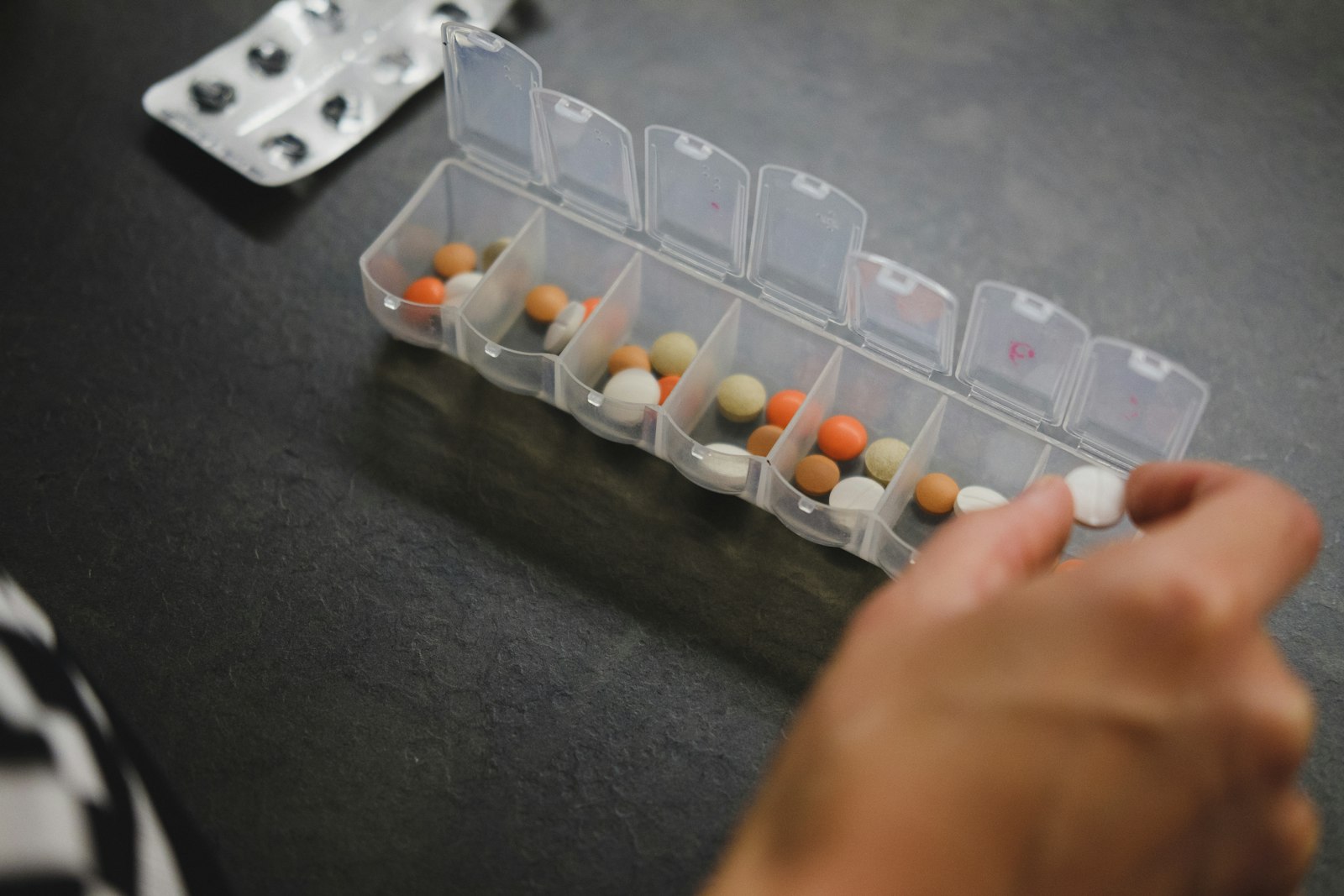
Clinically it is not always so simple. People whose on and offPeriods when Parkinson's medication is working ("on") alternating with periods when its effect has worn off ("off").Learn more pattern is finely balanced often notice when a preparation changes, and a tablet that looks different from the one in the dosette box is a real source of dosing errors at home. This is a conversation to have with your neurologist and your pharmacist together, not a decision to make at the counter under time pressure.
If cost is the obstacle, there is a route most people have never heard of. For therapeutic group premiums, the PBS notes that “exemptions on medical grounds are available, but must be granted by Services Australia.” That is a specific, narrow mechanism rather than a general appeal against pricing — ask your prescriber whether your situation fits it, instead of assuming either way.
The early supply rule, and the holiday it ruins
The PBS restricts how soon a repeat can be filled and still attract Safety Net benefits. The rule:
The Safety Net early supply rule applies to Pharmaceutical benefits if the prescription is: supplied within 20 days of a previous supply usually for a month’s quantity of the same medicine or any brand of an equivalent medicine to the same person under ‘immediate supply’ provisions; or supplied within 50 days of a previous supply of a 60-day maximum dispensed quantity (60-day prescription) of the same medicine or any brand of an equivalent medicine to the same person under ‘immediate supply’ provisions.
If it is an early supply, three things follow. What you pay does not count towards the Safety Net. After your threshold is reached the prescription is still supplied at the non-Safety Net amount. And discounting of the co-payment is not permitted.
The everyday version: stocking up the week before a trip costs more than a normal script, gives you nothing towards your Safety Net, and cannot be discounted. Plan a longer trip with your prescriber well in advance instead of raiding the pharmacy on the way to the airport. One relief for people discharged from hospital with a bag of medicines — “the Safety Net early supply rule does not apply to PBS/RPBS prescriptions originating from hospitals.”
What is actually PBS-listed for Parkinson’s
The PBS groups medicines by body system. Under N04 — Anti-Parkinson drugs, the dopaminergic listings currently include:
| Group | Listed medicines |
|---|---|
| Dopa and dopa derivatives (N04BA) | Levodopa with benserazide; levodopa with carbidopa; levodopa with carbidopa and entacapone; foslevodopa with foscarbidopa |
| Adamantane derivatives (N04BB) | Amantadine |
| Dopamine agonists (N04BC) | Apomorphine, bromocriptine, cabergoline, pramipexole, rotigotine |
| MAO-B inhibitorsMedicines that block the enzyme monoamine oxidase B, slowing the breakdown of dopamine in the brain.Learn more (N04BD) | Rasagiline, safinamide, selegiline |
| Other dopaminergic agents (N04BX) | Entacapone, opicapone |
Being on the list is not the same as being subsidised for you. PBS listings carry restrictions — some items are authority-required, and some are subsidised only for particular indications. The PBS warns that “some medicines on the PBS are only subsidised for certain conditions.” If a prescription costs far more than the co-payment you expected, that is usually the reason, and the question to ask your prescriber is whether a PBS-subsidised alternative fits your case.
If this applies to you
| Your situation | What to do |
|---|---|
| You do not have a concession card and have never checked | Check. $7.70 instead of $25.00 per script is the largest saving available to you, and it also cuts your Safety Net threshold from $1,748.20 to $277.20 |
| You reached the Safety Net last year around September | Recount for 2026. Cheaper scripts plus a higher threshold means roughly 70 general co-payments rather than about 54 |
| You use two pharmacies, or a hospital pharmacy as well | Get form PB240 and have every supply recorded on it, or your spending will never add up in one place |
| You think you passed the threshold months ago | Apply for the card now, and use form PB132 to claim the difference back |
| You forgot to show your concession card at the counter | That is refundable with the same PB132 form. Do not write it off |
| Your pharmacy stopped discounting your script | From 1 January 2026 the discount is nil without a concession card, and capped at $0.60 with one |
| You are going away and want to stock up | Talk to your prescriber early. An early supply costs full price, earns nothing towards your Safety Net, and cannot be discounted |
| You have been switched to a different brand of levodopa | Raise it with your neurologist and pharmacist. Brand switching is a clinical question in Parkinson’s, not only a price one |
| You rely on pharmacy delivery | Budget for it as a separate cost — delivery charges never count towards the Safety Net |
Medicine costs are only one part of the bill. What Medicare covers, and the five subsidised allied health visits a year that sit behind a chronic condition management plan, are set out in Medicare in Australia.
This page is not medical advice and cannot tell you what your own prescriptions will cost. Prices, thresholds and listings were checked against PBS and Services Australia pages in August 2026. PBS co-payments and Safety Net thresholds change every 1 January and listings change monthly, so confirm the current figures with your pharmacist before relying on them.